Showing posts with label Non Fiction Books. Show all posts

Thursday, September 13, 2012

Raold Dahl Day

There are many times when I am thankful for the fact that I have started using Twitter. When I first started tweeting it was with my personal account. It was just...ok! It wasn't until I started using it for the Falcon's Fables as a way to connect with my fellow teacher librarians that I starting realizing its full potential.

Case in point, I logged into Twitter today and immediately noticed many tweets with the #roalddahlday. After reading them and investigating I realized that today is the anniversary of Roald Dahls birthday. Now really, who isn't a Roald Dahl fan? There is at least one book out there by him that you have read and really enjoyed. I'm not the biggest Charlie and the Chocolate Factory  fan (blasphemy, I know!) but I simply adore Matilda! I had to get in on the Roald Dahl Day action. I did a quick scan of my lesson plans and realized that I had left KA open for a free day, perfect! I quickly went about the room pulling all our Roald Dahl books off the shelf. I took a quick instagram photo to tweet and post on Facebook and then decided how I would introduce The Man to the children.
Roald Dahl

Thankfully, our only biography on Roald Dahl is Roald Dahl: A Life of Imagination  by Jennifer Boothroyd. This series of biographies is written especially for young children. After introducing them to Roald Dahl, I asked if they had ever heard of him. I got a lot of blank stares. Ok, I know young children don't always pay attention to the authors of their favorite books. Next I mentioned Charlie and the Chocolate Factory  which of course brought on shouts of "I love that movie" or "oh yeah I saw that one on tv". Ok good, so they do know The Man even if they don't know it yet.

Next we read The Enormous Crocodile. This story is about an incredibly hungry and not very nice crocodile. His favorite meal is a plump juicy little child. On his journey to gobble up as many children as he can, the crocodile encounters different animals who find him to be greedy, mean and disgusting. Thankfully, those same animals manage to foil the crocodiles secret plans and clever tricks. I've never witnessed a group of kindergarteners so enthralled with a book. Hardly anyone fidgeted and everyone payed close attention. Truly Roald Dahl does have a way with the imagination.

My favorite moment of the morning was when one of the children looked over to my book display carefully investigating every Roald Dahl book. At last his eyes rested on The Roald Dahl Treasury with its cover of various characters reading different book. He carefully raised his hand with excitement and when called upon exclaimed, "I love The BFG! Do you know The BFG because I know him and love him." Then turning to his classmates our little kindergartener said "Do you know the best thing about The BFG? If Ms. Natalie were to stand next to him she would be teeny tiny".

The BFG
Yes I know The Big Friendly Giant as well as many other famous Roald Dahl characters. They are all special to me and many children young and old. Happy birthday Mr. Dahl, you're The Man!


Monday, April 30, 2012

Just One More Time!

I just couldn't resist showing off a 4th grade Prezi in action. Andrew Huang and Ethan Gray chose to research Viking mythology as their religion. Many of the children who chose to research mythology found the topic a little more difficult. It took them into history requiring them to think about the type of people that would have worshiped god in such strange ways.
They did a wonderful job of presenting their research and putting together a creative Prezi.


If you would like to view just Andrew and Ethan's Prezi you can view here.

As part of their assignment they had to choose another way to present their findings. Ethan and Andrew not only put together a great Prezi but they also wrote this delightful poem.

A Viking God Rhyme 
There is a woman named Freyda
Whose children are Frigg and Thor
Her Husband’s name is Odin
Who is the Viking God core.
If a NORSE person dies
Its not very cool
When they were buried
They were buried with every tool.


Friday, March 30, 2012

Another great Prezi

Ethan Gray and Andrew Huang in 4A just did a wonderful Prezi presentation. It is an excellent example of how to put together your research in an interesting and engaging way. Here it is...

Wednesday, February 29, 2012

Pa's Fiddle Project

I am often asked what my favorite book in the library is. Normally I don't like to pick a favorite of anything. Really, there are too many good books out there to choose just one. But there is a series of books that I hold dear to my heart.

I first read Little House on the Prairie in 2nd grade with my class. Now, I don't remember much of 2nd grade except I didn't really enjoy my teacher and reading the Little House book for the first time. I can't remember when I finished the entire series because I feel like I have read them my entire life. As soon as I finished the last book I started over again and again. Laura was me and I was Laura. When I played dress up, I created costumes from the book. I dreamed of eating Vanity Cakes and falling asleep to Pa's fiddle. As I grew older I didn't lose interest in the books. I read them in Jr. High, High School and College. Yes, last year I reread the series again.

Occasionally I find myself reading blogs about Laura and the Little House books. I have planned a dream trip to visit all the Little House sites. As an American Studies major, I spent much time reading and learning about the pioneers. I would say Laura Ingalls Wilder is probably the reason I became and American Studies major.

Would you say the Little House books are my favorites? Perhaps they are. When a 2nd or 3rd grader asks for a book recommendation they are always on the top of my list. Sometimes the children take my advice, sometimes they have already read the book and we discuss our favorite parts. I have even tried to get the boys to read the books.

Middle Tennessee State University's director of The Center for Popular Music, Dr. Dale Cockrell is the founder, owner and president of Pa's Fiddle Recordings LLC. This record label is dedicated to preserving and recording the songs written about in the Little House Series. How cool is that. Many of these American folk songs have become lost to pop culture. We might know of a few here or there but often times while reading the Little House books one can only imagine what pa and his fiddle sound like. Most likely you don't know the song at all. Pa's Fiddle Recordings LLC changes all that. Now you can purchase recordings of songs described in the Little House series. Dr. Cockrell along with MTSU students and renowned Country Music musicians all worked together to film a concert celebrating the Little House songs. Pa's Fiddle: America's Music will air on PBS during their June pledge drives.

I think many of you fellow Little House fans might be just as excited as I am to know that Pa's pioneer spirit and Laura's memories are not only now available in book form but also available for your listening pleasure. Once I get my hands on Pa's Fiddle CD's I think I will read the books again and listen to the songs as they appear in the book. I am one step closer to my childhood dream of being Laura Ingalls Wilder.

As for the PBS special I am very excited to watch it this June. For now, here is a YouTube clip promoting the concert. 


Pa's Fiddle Project

Pa's Fiddle PBS Special


Tuesday, February 14, 2012

Happy St. Valentines Day

Ah love is in the air and so many different kinds of love too. Years ago, somewhere in my life, high school perhaps, I learned that the English language is seriously lacking in regards to the word LOVE. Such a complex feeling should have more than one word to describe it. Greek, for example, has at least 4 different words for love. Here is how I understand them.
  1. Agape means unconditional love. As Catholics we often hear this word as God's love for us. It can also mean true love or the highest form of love. Some people believe that most of us will never truly achieve this love because it really means to love someone more than yourself. 
  2. Eros is the love your might feel when you first see someone you think is cute. Perhaps it is love at first sight or attraction. It is an appreciation of the beauty of a person both inside and out. 
  3. Philia is the love we feel for friends and neighbors. It is the same love that we extend to many things. It can be the love we feel for our very close friend, the love that allows us to help others and even the love that we feel for animals. 
  4. Storge means affection in Greek. This is the love of family. It is a natural love that is steadfast and strong. The love you feel for your mom and dad is a love you are born with. 
Each word, each form of love is very unique and each of us hopes to experience all forms in our lifetime. From the day we are born and experience Storge, to kindergarten when we learn Philia and the love for our friends, to 5th grade and our first crush when we might experience Eros, part of the human experience is LOVE. Each week we attend mass and participate in Agape. Perhaps one day you will fall in love and get married. Perhaps one day you will use Philia to care for others through volunteer work or even your job. I hope you all achieve Agape and learn to love at least one person more than yourself whether is thru God,  with marriage or when you first meet your children.

Here are some library books that describe love in all these ways.

There are three things that will endure - faith, hope, and love - and the greatest of these is love. -
1Corinthians 13

Who will be your valentine?

Your mama has enough kisses to last a lifetime.

Storge is the effortless love of family

Celebrate the day of LOVE

Love personified


Monday, November 21, 2011

Thank You!

Well another book fair has come and gone. It is probably one of my favorite events. I just adore seeing children and parents getting excited over books. As part of the St. Philip's book fair tradition parents are given the opportunity to purchase books for the classrooms and library. I thought I would give a shout out to the people who donated to the library. So here goes....

Donated by Alisa Balian

Donated by Alexander Balian

Donated by The Norton Family

Donated by Roxanne Key
Thank you for the wonderful books!

Tuesday, May 24, 2011

Things Have Been Busy and Cinderella!

First let me apologize for the lack of posts lately. Now that I work part time I find  my other library duties make it difficult to find time to blog. On top of that Drama Club is preparing for our spring musical, Rodgers and Hammerstein's Cinderella. I am knee deep in costumes, sets and props. Not to mention singing and dancing.

Second, as usual my daily life has inspired me in the library. We all know the Disney version of Cinderella and some of us may recognize that the Brother's Grimm version is slightly different. But the tale of Cinderella has a rich history that translates to different societies with many versions of the same basic story.

Cinderella is probably one of the most well known folk tales.  The characteristics of folklore include stories that are common among a group of people and are often past down from generation to generation. There are around 1000 different versions of Cinderella, the earliest coming from China. Tuan Ch'eng-shih wrote down the Chinese tale sometime in the ninth century (850-860 CE) But that does not mean he created the story. He simply was the first to put the tale on paper. The Chinese people had been telling the story of a Yeh-Shen and her magical fish for as long as they could remember. The theme of the story is the same as the Cinderella story of today. Yeh-Shen is unappreciated and unloved. Her magical fish gives her the opportunity to meet the prince who recognizes her worth from her golden shoe.

The Disney version of Cinderella comes from the folktale written down by Charles Perrault. Written in 1697 Contes de ma Mere L'Oye introduces the Fairy Godmother, the pumpkin carriage, animal helpers and the glass slipper. In this version Cinderella and her kind heart takes pity on her step sisters and finds them husbands too.

Another famous version of Cinderella is interpreted by the Brothers Grimm. This German version also goes by the name Ash Girl and is dark in nature. There is no Fairy Godmother but instead a magical tree planted by Cinderella at her mother's grave. After Cinderella gets her prince the stepsisters eyes are pecked out by birds living in the tree as punishment for their cruelty toward Cinderella.

St. Philip's Drama Club is doing the Rodgers and Hammerstein Musical version of Cinderella. There is a Godmother and pumpkin coach but no true animal helpers. I hope you come out and see our production. If you are curious to read other Cinderella tales the library has a few different versions including

  • Little Gold Star by Robert San Souci
  • Ella Enchanted by Gail Carson Levine
  • Grimm's Fairy Tales Abridged
  • The Korean Cinderella by Shirley Climo
  • Cinderella's Rat by Susan Meddaugh
  • Trollerella by Karen M. Bourgeios 


For more information on the history of Cinderella visit this site!
http://www.endicott-studio.com/rdrm/forashs.html

Wednesday, March 30, 2011

Pie and Burger Day!

I thoroughly enjoy showing off the excellent resources our library has. I think I also have a secret passion for research in general. I am always encountering reasons to look up things. Whether it is the definition of a word, the life of a famous person, or obscure facts that strike my fancy I am always utilizing our library and the internet. Since today is Pie and Burger Day I started wondering where the Hamburger came from. It seems so very "All American" but is it really? Did the hamburger come from America or is it really a product of Hamburg, Germany as many rumors suggest?

First I turned to the encyclopedia. I figured this would be a great jumping off point. I pulled out the World Book Encyclopedia Volume H. A quick scan of the H encyclopedia revealed......nothing. But, as a smart researcher I realized that does not mean the encyclopedia doesn't contain information. I decided to pull out the Index, the last volume in the encyclopedia. It revealed that there is some information on Hamburgers under the food section in the article titled Interesting Facts About Food (F:329). Here is what I found. "Hamburger was orginally called Hamburg steak. It was named after Hamburg, Germany.

A-HA!!!! Well that answers my question but I am not satisfied. I want to know more. Like is Hamburg Steak the same as a hamburger or did the hamburger evolve from Hamburg Steak? If so, what exactly is Hamburg Steak. How did a "german" food become so All American?

I did a quick library catalog search to see if we had any other books on the subject. I didn't think we would have "The History of the Hamburger" but I like to cover all my bases. Next I figured while I was on Destiny Quest it would be easy to click the internet button and use Quest as an internet search and not just a library catalog search. I also know that I more likely to find child friendly websites. If need be I can always do a google search later. The Destiny search returned many websites. Some on farming and others on Hamburg, Germany. Best of all there was one titled History of Hamburgers: Topic American Cookinghttp://whatscookingamerica.net/History/HamburgerHistory.htm

Here is what I learned:


  • The idea of eating ground meat is not new. There is evidence that the Ancient Egyptians ate ground meat patties. Throughout history there has been mention of various cultures eating similar foods. 
  • Hamburg Steak is a traditional German food that doesn't really resemble today's hamburger. It was brought to America in the 1850's by German sailors and immigrants as a food that would last through long sea voyages.  It was a form of salted and spiced meat that had to be chopped due to its tough consistency. Sometimes, it was served between two pieces of bread to immigrants arriving in American ports. 
  • Ground meat did not originally have the same consistency it does today. Before the invention of meat choppers and grinders ground meat was really just roughly chopped and chunky.  
  • Many people claim to have invented the hamburger as we know it today. 
  • Some say it was Charlie Nagreen of Seymour, Wisconsin who invented the first modern hamburger. The story goes that he was selling meatballs at the Outagamie County Fair when he realized they were too hard to eat while walking around the fair. To make them easier to eat he flattened them and put them between two pieces of bread. 
  • In a similar story the brothers Frank and Charles Menches from Akron, Ohio are said to have invented the first modern hamburger while traveling the county fair circuit. While in Hamburg, New York they invented the modern hamburger, naming it after the city. 
  • Others say Oscar Weber Bilby was the true inventor of the modern hamburger because he put the ground meat between buns, not bread.  

    Well there you have it. The modern hamburger could be considered to be a product of Hamburg, Germany if only in the sense that Hamburg Steak is chopped of meat. While, that chopped up salty steak is definitely the inspiration for the ground meat, it does not taste the same.  The modern hamburger came about as an easy way to eat less salty ground meat. Whether it is served between bread or bun it is a yummy delight that Americans and the world enjoy on a daily basis.

Eat up all you Falcon's, its Pie and Burger Day!!!! Anyone care to research the history of the French Fry? 

Thursday, March 24, 2011

Inspiration!

I am always inspired by the many events going on during the school day. This week the Jr. High Science Fair had me thinking about how useful our library is to the students when they have less literary assignments. I decided to pretend I was entering a science fair and see what I came up with.

The first stop is to choose an experiment. I already know the library is chalk full of experiment books. Here are a few...


Hmmmmm, I am hungry I think I will explore the book Try it With Food from Scholastic Books. There are many different types of experiments in this book but the one that catches my eye is Gelatin Optics (pun intended). "Get 'jiggly' with it in this experiment and make some colorful gelatin 'glasses.' Try them on to demonstrate the principles of magnification and refraction." 


It is a simple experiment that asks you to make various sizes of gelatin glasses using an assortment of small containers such as measuring cups, spoons and saucers. Once the gelatin has hardened you take it out of its molds and use the gelatin as lenses to look at objects, pictures, and the pages of books. I soon discover that the size of the lens affects the magnification. Who knew JELLO could be used as a magnifying lens. Pretty cool. But I still don't understand how it works. The book explains a bit, defining words like concave, convex and refract. But I want to dig deeper.

Call Number
535
STI
Does our library offer books to help me better understand these terms? It sure does!!!!!! Using our computer catalogue I searcher these key words: lenses, light, magnification, and refract. I found this book.

Manipulating Light: Reflection, Refraction and Absorption by Darlene R. Stille.  is part of the Exploring Science series. This series takes a quick look at everything from contemporary issues, such as the greenhouse effect and genetics, to core curriculum themes, such as atoms, molecules and plant cells.


OK, but did I, a decidedly unscientific person, learn anything?!


Well, YES!!!! I learned that the gelatin, in the shape of a curved surface, acts as a magnifying glass. A magnifying glass makes objects look larger than they are. This is because of refraction. A ray of light enters the curved surface and bends as it goes, spreading out, or refracting, on its way to your eye. If the light ray does not bend we would not see clear images. Instead everything would be blurry. Our eyes work the same way. They too, have lenses that refract light. This is why a magnifying glass helps make the image bigger. 


PHEW!!!!!!!!! All this scientific thinking has me H U N G R Y. I think I will do a quick search using Destiny Quest Online to see what sort of yummy goodness I can make using gelatin! 


Here is what I found!
Jello Cookies Recipe found at 
http://www.food.com/recipe/jello-cookies-13745 

I am off to bake!


Thursday, March 17, 2011

New Arrivals

A new shipment of library books came into the library this week!  I felt as giddy as a kid on Christmas as I unpacked the two giant boxes of gorgeous books and placed them on the shelves for the students to enjoy.  Of course the first thing I said to the 4th graders that came just as I was finishing up was "We just received over 70 new books!"  They were ecstatic and anxious to see what they were.  Within the hour, 5 brand new books went home with delighted kids eager to explore their pages.

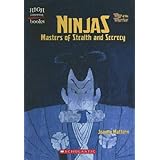
A few days before the new books arrived a 1st grader asked me, "Do you have any cool books?" Well, I certainly think all the books in the library are cool, but apparently he does not necessarily agree. However, with just a little digging I was able to get to the source of what "cool" was and he ended up happily taking home a leveled reader on Prince Caspian from the Narnia Chronicles. As I unpacked the boxes of new books I could not help wondering which ones my little 1st grade friend would classify as "cool." I'm guessing the books on Ninjas and Military Fighter Planes make the list.  What do you think?

Here is a just a sampling of the new books ready to be checked out.  The publisher's descriptions are underneath to give a little taste of what each book is about:

Product Details355.548 MAT
Mattern, Joanne, 1963-. Ninjas : masters of stealth and secrecy. New York : Children's Press, 2005.
Presents a brief introduction to ninjas, including their history, mythology, beliefs, weapons, and traditions.
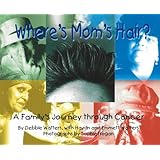
Product Details362.196 WAT
Watters, Debbie, 1961-. Where's Mom's hair? : a family journey through cancer. Toronto : Second Story Press, c2005.
In a way that provides clear and non-frightening answers, this personal journey highlights the kinds of questions children have when a loved one gets cancer.
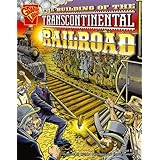
Product Details385 DUN
Dunn, Joeming W. Building the transcontinental railroad. Edina, Minn. : Magic Wagon, c2009.
In graphic novel format, this book offers an account of the construction of the Transcontinental Railroad.
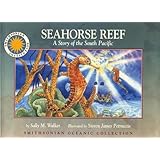
Product Details597.6798 WAL
Walker, Sally M. Seahorse reef : a story of the south Pacific. 1st ed. Norwalk, CT : Soundprints, 2000.
Describes a sea horse living in the coral reefs of the central Philippines, its habitat, life cycle, food, and how it protects itself from predators.
Product Details597.8 GIL
Gilpin, Daniel. Tree frogs, mud puppies, & other amphibians. Minneapolis, Minn. : Compass Point Books, 2006.
Introduces the species of amphibians including information on physical characteristics, habitats, and life cycles.
Product Details597.965 KLE
Klein, Adam G., 1976-. Yellow-bellied sea snakes. Anniversary ed. Edina, Minn. : Abdo Pub., c2006.
Presents an introduction to yellow-bellied sea snakes, in simple text with illustrations, and includes information on their size, color, habitat, food, and life cycle.

599.8 DEL
De la Bédoyere, Camilla. 100 things you should know about monkeys & apes. 2009 ed. Broomall, Pa. : Mason Crest Publishers, 2009, c2008.
Presents one hundred details about primates, including information about different species, how they communicate and move, their intelligence and family life.
Product Details616.9 OLL
Ollhoff, Jim, 1959-. What are germs? Edina, MN : Abdo Pub. Co., c2010.
This book describes scientists' discoveries of microbes (germs), including how they spread; how some of them cause diseases, and how medicines are used to control these diseases.
Product Details623.746 BUR
Burgan, Michael. The world's fastest military airplanes. Mankato, Minn. : Capstone Books, c2001.
Explains how jet planes operate and some of the uses that the military makes of them.
Product Details636.9359 LEA
Leavitt, Amie Jane. Care for a pet chinchilla. Hockessin, Del. : Mitchell Lane Publishers, 2010.
Provides advice on having a chinchilla as a pet, discussing its behavior, housing, life cycle, selection, feeding, and handling.
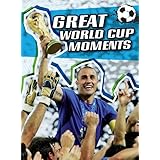
Product Details796.334 HUR
Hurley, Michael, 1979-. Great World Cup moments. Chicago : Heinemann Library, c2010.
Recounts some of the greatest moments in World Cup history and profiles the soccer stars and teams that made them possible.
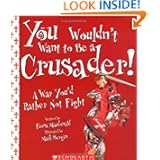
Product Details956.014 MAC
Macdonald, Fiona, 1958-. You wouldn't want to be a crusader! : a war you'd rather not fight. Brigton, BNI : Book House ;, 2005.
Cartoons and facts combine to describe the experiences of European knights fighting in the Crusades.
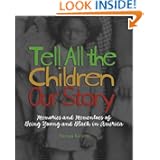
Product Details973.0496 BOL
Bolden, Tonya. Tell all the children our story : memories and mementos of being young and Black in America. New York : Abrams, 2001.
Photographs, illustrations, and text describe the experiences of African-American children growing up in the United States from the first African-American baby born in the Jamestown colony through the children growing up in the dawn of the twenty-first century.
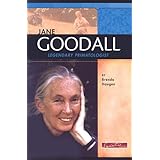
Product DetailsB GOO
Haugen, Brenda. Jane Goodall : legendary primatologist. Minneapolis, Minn. : Compass Point Books, c2006.
Studies the life of Jane Goodall, whose research and dedication has ensured the survival and well-being of chimpanzees in Africa.
Product DetailsFIC WIL
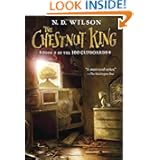
Wilson, Nathan D. The Chestnut King. 1st ed. New York : Random House, c2010.
Twelve-year-old Henry York, finally reunited with his family, works with them and the Chestnut King, the long-deposed and mythic leader of the faeren people, to destroy Nimiane and her forces of evil.
Product DetailsFIC CRO
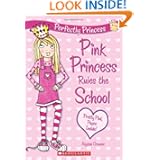
Crowne, Alyssa. Pink princess rules the school. New York : Scholastic, 2009.
Juliet Henry is planning a party for her seventh birthday, and she wants to invite only girls and have everything pink, from the food to the outfits. But the boys in her class don't want to be left out of the fun. Will they spoil the pink princess party?


HAPPY READING!